
Tree-level water monitoring for plantations and orchards
BioT builds the TreeKiT, a sensor node that measures how a tree's stem changes in diameter through the day. That pattern shows how well the tree is coping with water, so growers can irrigate at the right moment and in the right amount.
Stem radius over one week (illustration)
The stem shrinks during the day and recovers overnight. When the recovery gets shallower from one night to the next, the tree is building up a water deficit.
Why measure the tree itself
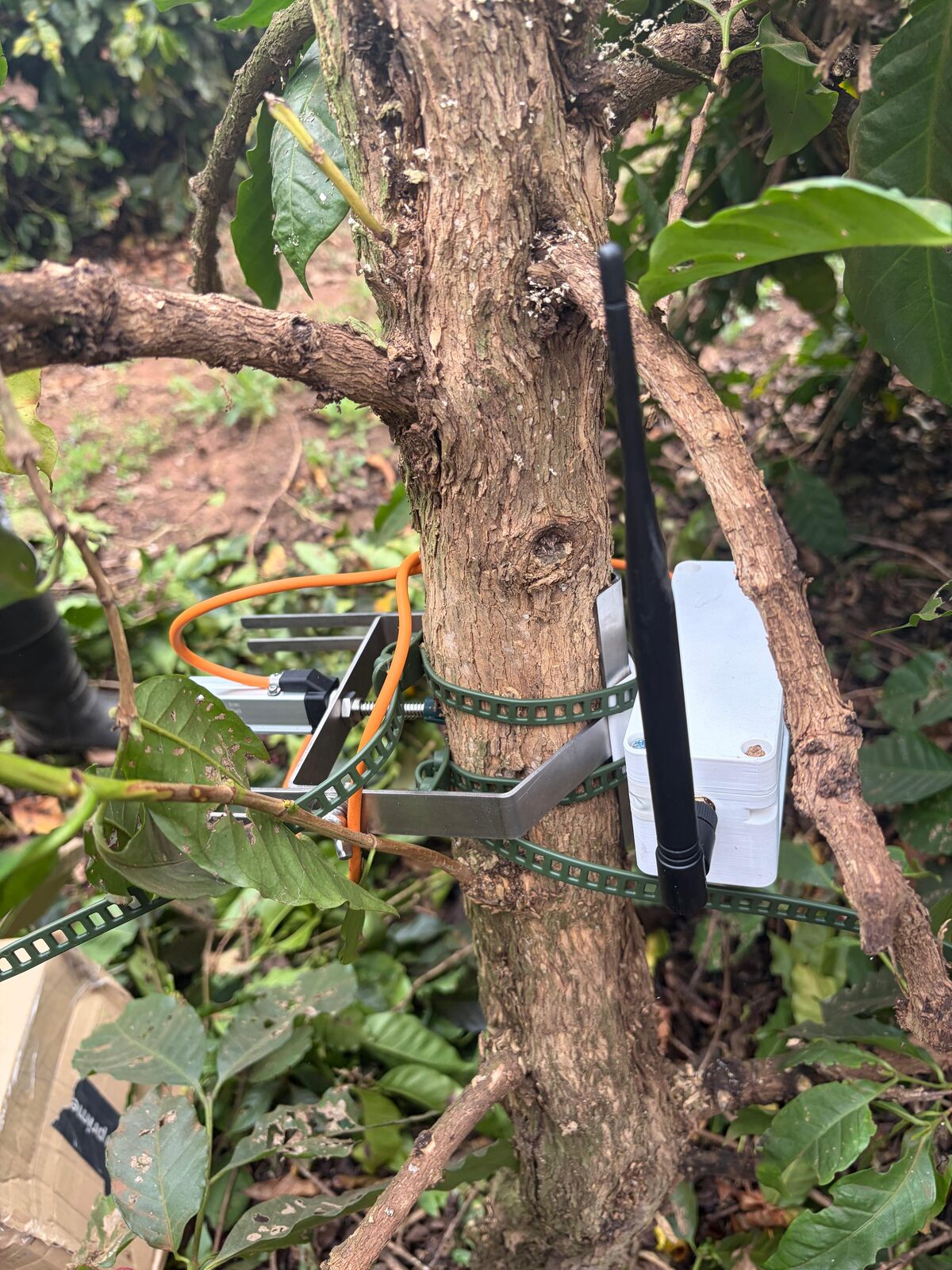
During the day a tree loses water through its leaves and its stem contracts slightly. Overnight it takes water up again and the stem recovers. The size of that swing, and how completely the stem recovers, changes with the tree's water status.
Weather and soil readings describe the conditions around a tree. The stem shows how the tree is responding to them, which is the information a grower needs when deciding whether to irrigate.
Starting with real-world applications
We are working with farmers and agronomists to deploy the TreeKiT in real-world settings, gathering data and refining our approach. Click About us to learn more.